Center Certification & Testing International

As the new version of the general standard IEC 60335-1:2020 is gradually implemented, the safety standard for motor-based kitchen appliances has also been updated to IEC 60335-2-14:2025. This standard will gradually replace the old version IEC 60335-2-14:2016 + AMD1:2019 and will be officially mandatory from February 7, 2027.
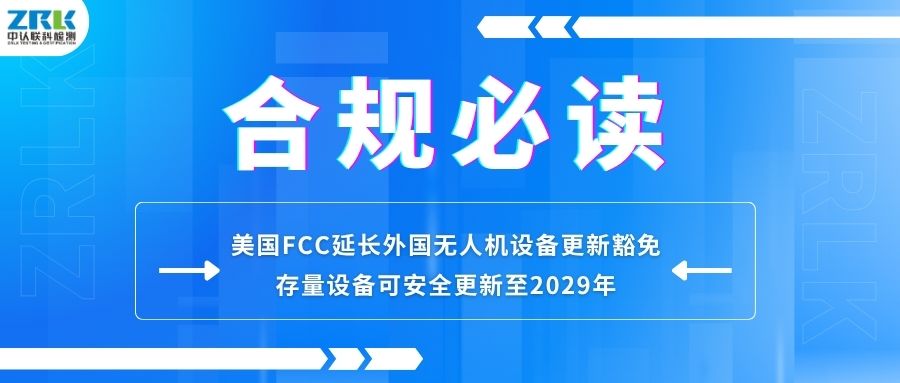
Recently, the Federal Communications Commission (FCC) issued the latest announcement, announcing the extension of the temporary exemption period for foreign-made UAVs, UAV components and consumer-grade routers, allowing related equipment that has been approved for use in the US market to continue to receive software and firmware updates until January 1, 2029. This delay has released an important buffer signal for the industry, and also provided key guidance for the compliance and product operation and maintenance of related manufacturers around the world.

With the vigorous development of the global electric travel market, as an important manufacturing and consumer market in Southeast Asia, the changes of its technical regulations directly affect the strategic layout of China\'s export enterprises. Recently, the Ministry of Construction of Vietnam officially issued Circular No.13/2026/TT-BXD, and established a brand-new national standard for power batteries for electric motorcycles and mopeds-QCVN31: 2026/BXD. The standard will be enforced on October 9, 2026, and will replace the QCVN 91:2024/BGTVT standard issued by the former Ministry of Communications.
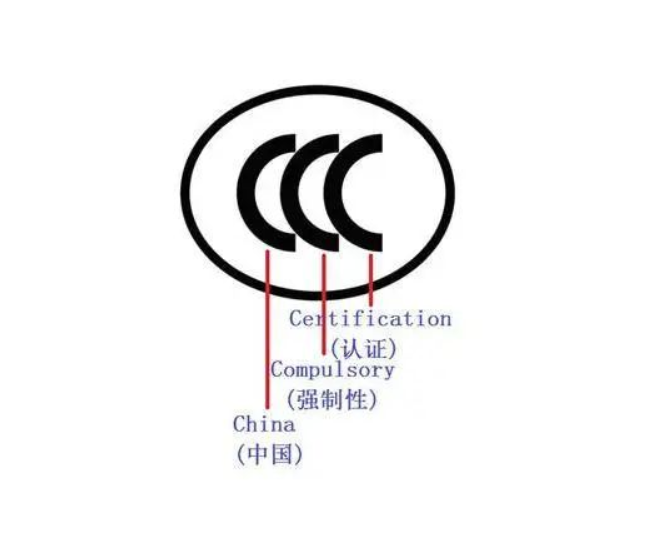
With improved domestic electronic product supervision in China, power banks have been incorporated into China’s mandatory CCC certification catalogue. Products without valid certification are prohibited from factory release, domestic sales and import/export, hence CCC becomes a mandatory prerequisite for manufacturers to start compliant production and expand market business. Many small and medium-sized producers encounter test failure and delayed certification due to unfamiliar application rules. The following sorts out document checklist and full certification workflow for faster certification acquisition.

Chinese wireless mouse manufacturers must secure IMDA certification to export products to Singapore. Under local regulations, all mice equipped with 2.4GHz RF modules require official IMDA registration for smooth customs clearance and sales in physical supermarkets and online stores; non-certified commodities will be detained and banned from selling, making IMDA the primary market entry barrier for Singapore exports. Many factories face delayed shipment due to incomplete paperwork or improper certification operation. This article sorts out document requirements and application workflow to help manufacturers obtain certification efficiently and develop Singapore’s consumer market.

ANATEL is Brazil’s exclusive regulatory authority for telecommunication compliance. All smart glasses embedded with Wi-Fi, Bluetooth and other RF communication modules must obtain mandatory ANATEL certification; uncertified items are denied customs clearance and domestic sales in Brazil. For domestic Chinese smart glass manufacturers, proper document preparation and familiarization with certification rules effectively shorten certification lead time and lower modification costs, which is the prerequisite to expand markets in Brazil and Latin America.
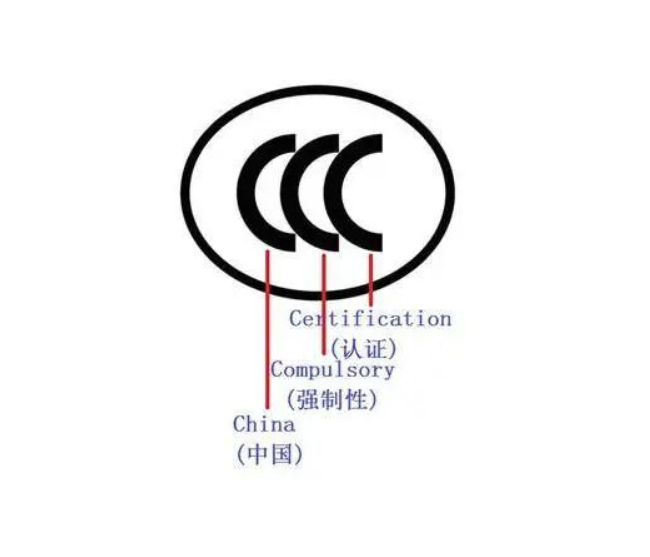
Under China’s domestic consumer electronics supervision framework, mandatory CCC certification for mobile phone chargers is the core market access qualification enabling legal production, circulation and sales. It serves as a critical measure to standardize mass production specifications, avoid regulatory penalties and cut down product safety hazards. With increasingly refined market supervision including unannounced factory inspections and regular random sampling, manufacturers can only achieve sustainable operation by completing certification formally and enforcing compliance during mass production.

On May 8, 2026, the World Trade Organization (WTO) issued Circular G/TBT/N/EU/1205, and the European Commission formally proposed to amend Annex XVII of REACH Regulation (EC) No.1907/2006, adding restrictions on hydrogenated terphenyls (PHT). The deadline for public comments on the draft circular is July 7, 2026, and it is planned to be formally adopted in the fourth quarter of 2026, and it is planned to take effect on the 20th day after the publication of the official bulletin of the European Union.
Learn the latest exciting content


Tik Tok