Center Certification & Testing International

Project Introduction
The halogen control requirements started in the PCB industry and are now slowly expanding into more products and fields, generally from industry associations and brand companies. Although there is no direct national law that mandates control, in buyer-oriented supply chains, it is often required to enforce halogen testing. Different industry regulations and internal standards of enterprises may have different requirements for halogens. Generally, the materials or components that need to be controlled and controlled by halogens are determined according to the requirements of specific enterprise standards.
Halogen hazards
Most organic halogen compounds are synthetic products, and there are more than 15,000 kinds of commercial halogenated hydrocarbons. Because they have some excellent performance, such as flame retardant, easy to dissolve, high reactivity, etc., and are widely used in flame retardants, fluxes, refrigerants, solvents, organic chemical raw materials, pesticides and pesticides, bleach, wool Degreasing agent, etc. However, these organic halogen compounds are toxic, latent in the human body and can cause cancer, and their biodegradation rate is very low, resulting in accumulation in the ecosystem, and some volatile organic halogen compounds have a great destructive effect on the ozone layer. It has a serious impact on the environment and human health.
The halogen element is rarely used directly in people's daily lives, and is generally used as an industrial raw material to synthesize halogen-containing compounds for different purposes. Most of the halogen compounds used in industry are organic halogen compounds, and many organic halogen compounds are classified as harmful chemicals for humans and the environment. They are banned or limited to use, and are the key pollutants controlled by countries around the world.
The halogen compounds currently used in products are mainly flame retardants, such as PBB, PBDE, TBBP-A, PCB, hexabromododecane, tribromophenol, short-chain chlorinated paraffin; used as refrigerants, thermal insulation materials Ozone-depleting substances, such as CFCs, HCFCs, HFCs, etc., as well as fire extinguishing agents, cleaning agents, pesticides, bleaching agents, wool degreasing agents, etc.
Halogen compounds have a wide range of applications in the electronics industry. For example, chlorinated paraffin can be used as a plasticizer for plastic materials, and difluorodichloromethane can be used as a blowing agent in various plastics such as ABS, PS, PVC and PU. However, halogen compounds are most commonly used as flame retardants. Common halogen flame retardants include bromine flame retardants such as PBB, PBDE, TBBP-A and HBCDD and chlorine flame retardants such as short-chain chlorinated paraffin and PCB. The use of flame retardants can play a flame-retardant effect, and halogen-based flame retardants have little effect on the inherent physical and mechanical properties of the flame-retardant substrate. However, the use of halogenated flame retardants also has a downside: in the event of fire, incomplete combustion of halogenated flame retardants will produce a large amount of carcinogens; and materials using halogenated flame retardants will produce a lot of smoke and Toxic corrosive gas, which hinders firefighting and evacuation of personnel, corrodes instruments and equipment. In addition, the halogen gas released from the combustion of halogen-containing polymers, when combined with water vapor, will generate corrosive and harmful gases (hydrogen halide), causing corrosion to some equipment and buildings.
Related legislation
Directives and regulations | Restriction requirements |
European Union 2011/65/EU | Limit use of bromine-containing flame retardants (PBB≤1000mg/kg, PBDE≤1000mg/kg) |
《Montreal Protocol》 | Limit 5 kinds of chlorofluorocarbons (CFCs) and 3 kinds of halons |
《Stockholm Convention》 | Restrictions on organochlorine pesticides, hexachlorobenzene (HCB), polychlorinated biphenyls (PCBs), polychlorinated dibenzo-p-dioxins (PCDDs) and polychlorinated dibenzofurans (PCDFs) |
IEC 61249-2-21 (Regulations for printed board materials) | Requirements PCB substrate materials: chlorine (Cl) ≤900mg/kg, bromine (Br) ≤900mg/kg, overall halogen (Cl Br) ≤1500mg/kg |
Test Methods
Halogen XRF rapid detection
Chemical testing of halogens
Chemical testing of specific halogen organics
Halogen machine verification
PVC composition analysis
Corporate Responsibility
As a manufacturer, in order to adapt to the international "halogen-free" trend, it is necessary to formulate a response plan in advance to ensure that the products meet the corresponding requirements. It is recommended that companies follow the following plan when introducing "non-halogenated":
1. The establishment of personnel awareness. Establish a "non-halogenated" response project team within the enterprise, and train relevant personnel to understand regulatory requirements, industry standards, and buyer requirements. After the awareness is established, the internal management specifications of the enterprise can be formulated according to the enterprise's situation.
2. It is necessary to communicate with the supplier, request that the materials they supply meet the corresponding requirements of "non-halogenated", and submit relevant certification documents, including test data or self-conformity declaration.
3. Carry out a risk assessment of the materials, and determine which materials are likely to contain these halogen compounds through some properties, uses, processes, etc. of the halogen compounds themselves, and perform a risk rating on the materials. The material risk rating can also be used to roughly classify suppliers, and the suppliers with relatively high material risks and low management and control capabilities are listed as the most important management targets. The frequency of audits to ensure product compliance.
4. Perform spot checks on the finished products to verify the conformity of the materials on the one hand and ensure that the finished products meet the requirements on the other hand.
5. If the enterprise has already used some high-risk target objects (such as brominated flame retardants, PVC, etc.) at this stage, it is necessary to formulate a specific high-risk material phase-out plan, change the existing process, find alternatives or replace Suppliers, etc.

Australian RCM certification
Label printers entering the Brazilian market, ANATEL certification is an essential passport! It is the recognition of the Brazilian Telecommunications Authority for the safety and compliance of electronic products, without which products cannot be legally sold.
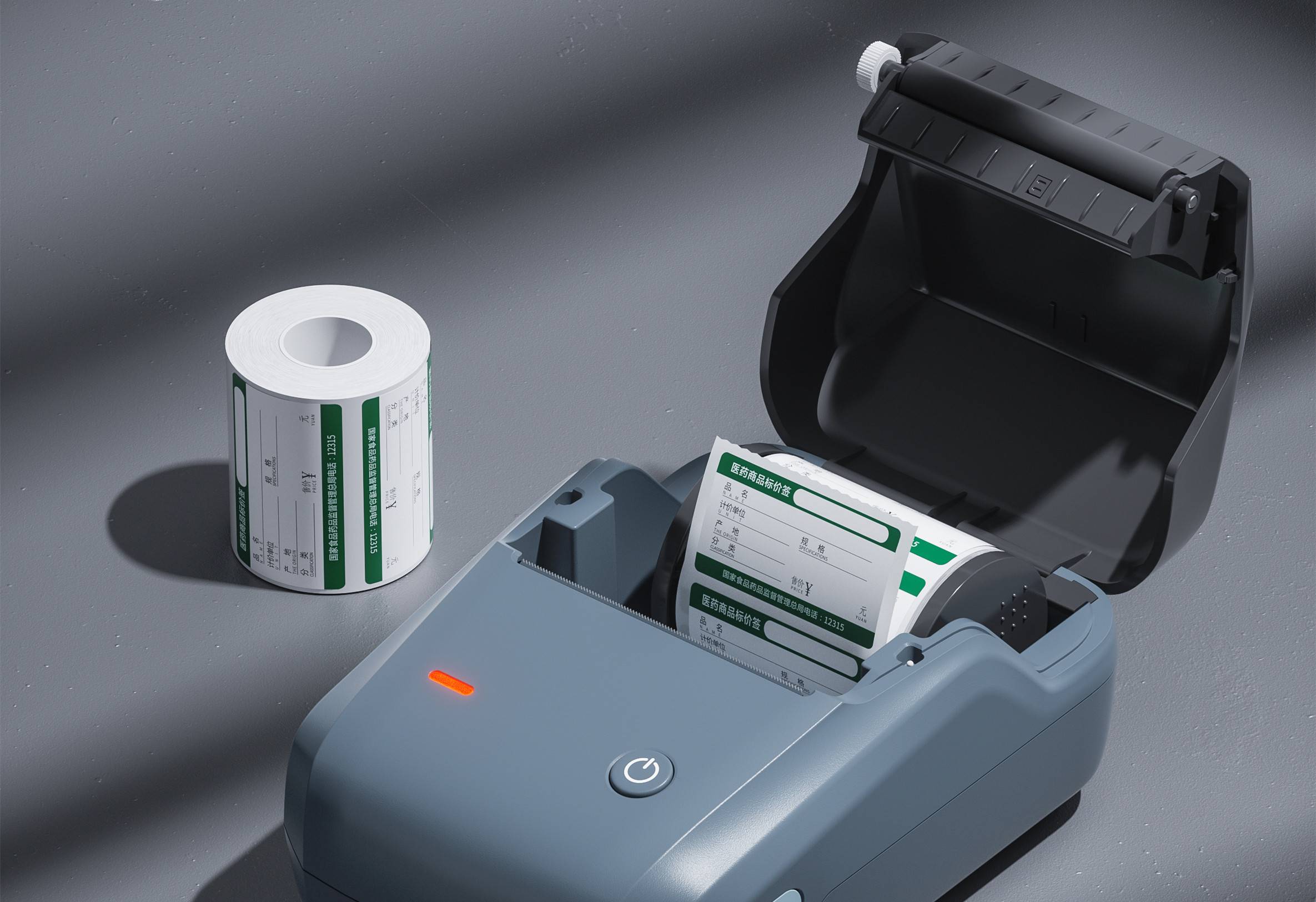
SRRC certification is not only a guarantee of product compliance, but also a key to opening up the market.
The halogen control requirements started in the PCB industry and are now slowly expanding into more products and fields, generally from industry associations and brand companies. Although there is no direct national law that mandates control, in buyer-oriented supply chains, it is often required to enforce halogen testing.
Get a quote

Tik Tok